

Commentary
Vladislav Gorin
{
  "authors": [
    "Vladislav Gorin"
  ],
  "type": "commentary",
  "blog": "Carnegie Politika",
  "centerAffiliationAll": "",
  "centers": [
    "Carnegie Endowment for International Peace",
    "Carnegie Russia Eurasia Center"
  ],
  "englishNewsletterAll": "",
  "nonEnglishNewsletterAll": "",
  "primaryCenter": "Carnegie Russia Eurasia Center",
  "programAffiliation": "",
  "regions": [
    "Russia"
  ],
  "topics": [
    "Domestic Politics"
  ]
}
Source: Getty
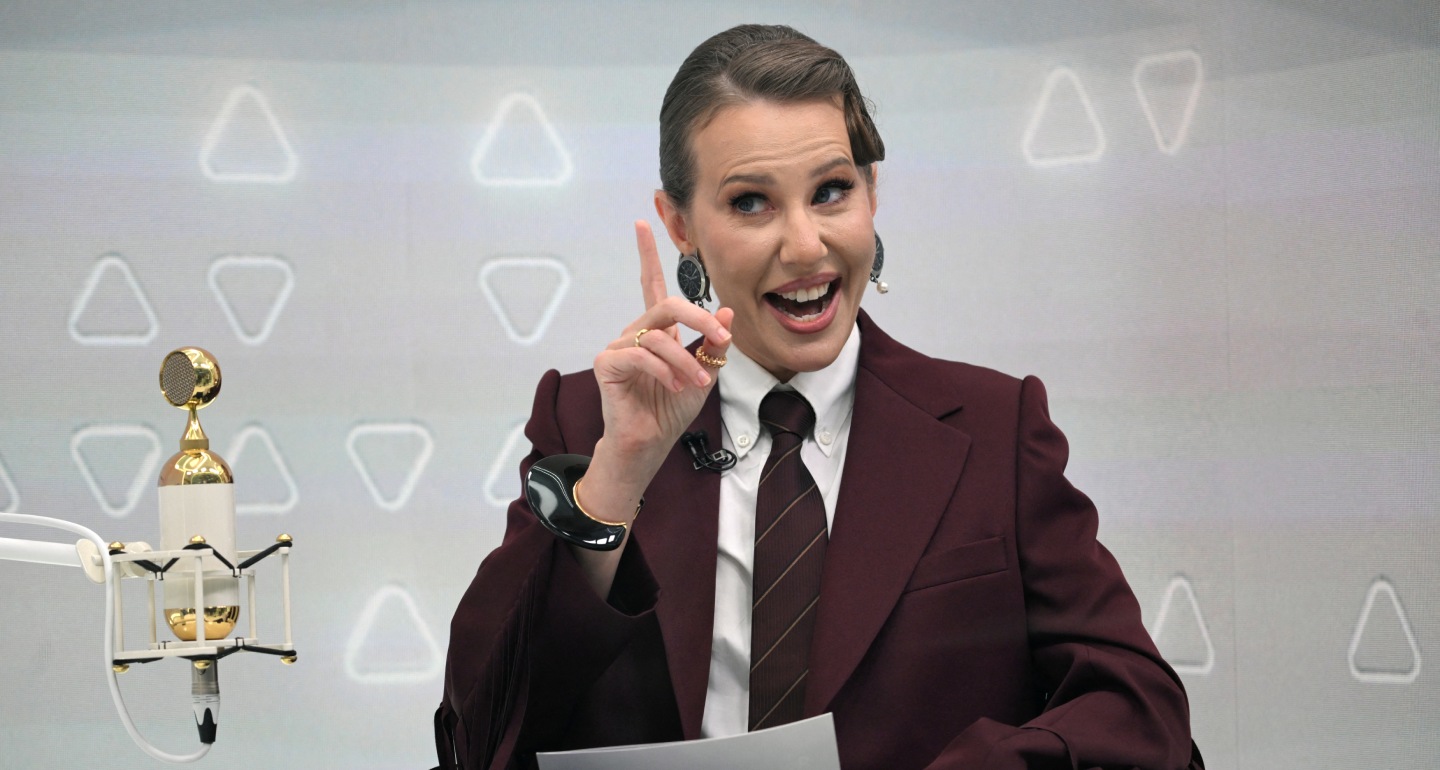
Reading the purported correspondence of celebrity Ksenia Sobchak sheds light on her role within the system, and how journalism and politics function in Putin’s Russia.
On July 9, the hacker group Black Mirror published what it said was the private correspondence of Ksenia Sobchak, a Russian celebrity, media manager, and former presidential candidate often dubbed “Putin’s goddaughter.” The hackers claimed they had stolen an archive of messages from 2015 to 2026, amounting to some 350 gigabytes. While Sobchak admitted hackers had gained access to her Telegram account, she claimed the published messages were fake. However, the nature of the interactions, and the extent to which they correlate with changes to material published by her media holding Ostorozhno Media, suggest that the material is genuine.
Sobchak, forty-four, is best known in the West for being the daughter of the man—Anatoly Sobchak—who, as mayor of St. Petersburg, launched President Vladimir Putin’s political career in the early 1990s. Putin has always spoken of his late mentor with warmth and reverence. Inside Russia, however, Ksenia Sobchak has been a prominent TV personality, presenter, and interviewer in her own right for over two decades.
So far, Black Mirror has only released extracts from the messages. But they reveal a great deal: that Sobchak was very upset by Russia’s full-scale invasion of Ukraine; that she discussed the war with Andriy Yermak, then chief of staff to Ukrainian President Volodymyr Zelensky, in 2022; and that she helped the late opposition leader Alexei Navalny with a 2016 investigation into Igor Sechin, the CEO of state-owned oil giant Rosneft. But they’re most interesting for what they reveal about Sobchak’s role in Russia’s political system.
The label of “Putin’s goddaughter” often given to Sobchak by Western media is incorrect. Furthermore, the messages show that Sobchak does not enjoy a privileged position—far from it. While she is in regular contact with officials who manage—and censor—Russian media, far from all of the communication is at a senior level. In one case, she responds to a junior official in Moscow City Hall. The messages show Sobchak frequently trying to curry favor with officials. She writes to presidential administration official Sergei Novikov to say that she wants to “restore” her contacts in the Kremlin. And in an exchange with the influential propagandist Margarita Simonyan, she asks for help to repair her relationship with Kremlin deputy chief of staff Alexei Gromov: the main overseer of the Russian media landscape.
Indeed, her relatively junior interlocutors (and how they treat her) suggest that she does not wield real influence in Russian politics: In other words, she cannot call Putin or his chief of staff. In the event of an emergency, she could presumably reach them via her mother (Anatoly Sobchak’s widow), Lyudmila Narusova, who claims to be able to reach him by phone. A long-serving member of the Federation Council, Russia’s upper chamber of parliament, Narusova often criticizes the Kremlin on key issues. But her privileged status—similar to that of a dowager empress at court—evidently does not extend to her daughter.
The nature of the apparent relationship between Sobchak and Russia’s censors is familiar to observers of pro-Kremlin media. Above all, the state exerts control via the distribution of money and information. It also has the option of banning reporting on certain topics and individuals. These bans can be enforced by the security forces.
Of course, pro-Kremlin media outlets are not only financed by the state. They can also earn money from advertising. Or they can sell coverage to companies and take money for not reporting certain news. Such arrangements have been common practice in Russia for many years. Typically, such financial “partnerships” arise when a media outlet publishes negative information about a potential client (or threatens to do so).
There’s little doubt that a similar dynamic was behind a 2022 conflict between Sobchak and Sergei Chemezov, head of the state defense conglomerate Rostec, which led to the jailing of some of Sobchak’s employees, a search of Sobchak’s apartment, and Sobchak herself briefly leaving the country. The dispute was resolved when Sobchak publicly apologized to Chemezov (the leaked messages appear to show Sobchak coordinating the wording of her apology with Rostec).
The way in which Sobchak’s purported correspondence was published also sheds light on the nature of Russia’s broader political system. Black Mirror specializes in the theft of personal data of people inside Russia, and claims to have hacked dozens of organizations and individuals since it appeared in 2019. These include ex-Kremlin chief of staff Alexander Voloshin; ex-Defense Minister Sergei Shoigu; the late founder of the Wagner mercenary company Yevgeny Prigozhin; and Bishop Tikhon (Shevkunov), whom many believe to be Putin’s confessor.
In 2024, a member of Black Mirror told Radio Free Europe/Radio Liberty that the motivation was purely commercial. However, the author of the article noted that many Russian hacking groups cooperate with the country’s security services. The journalist Andrei Zakharov has said that Black Mirror is likely under the protection of the Federal Security Service (FSB). It is hard to imagine it could have survived so long otherwise. In Sobchak’s case, it was noticeable how quickly the stolen messages were posted by the VChK-OGPU Telegram channel, which has been linked to the security services.
In the wake of the leak, Russia’s chief propagandist Vladimir Solovyov accused Sobchak and her mother (albeit without naming names) of “treachery” over the interactions with Navalny and “foreign agents.” Sobchak took this as a direct threat that she might end up being formally hit with treason charges.
It’s easy to understand why Sobchak—and other mid-level representatives of Russia’s elite—might be alarmed. When notions of “real war” and the need to avoid “divisions in society” are increasingly dominant in the Kremlin, it’s possible officials could decide to make an example of her to show where they are drawing new red lines.
After all, Sobchak has been obliged to play such a role twice before. In 2018, she was chosen as a presidential candidate to go up against Putin and—by performing badly—show the weakness of Western liberal ideas. And in 2023, she was one of the celebrities punished for taking part in an “almost naked party” in Moscow—deemed an inappropriate event amid the fighting in Ukraine. She was obliged to issue a public apology.
Another such demonstrative “punishment” could help communicate to Russian society that the war has entered a decisive phase, that no dissent will be tolerated, and that contact with foreigners—particularly from “enemy” countries—is unacceptable.
That does not necessarily mean that Sobchak’s messages were leaked on the orders of the security services. At least so far, neither Sobchak nor her mother has suffered any significant consequences from the hack. If they do, it would likely involve a quiet retirement for Narusova, and the end of a prestigious career in Putin’s media for Sobchak.
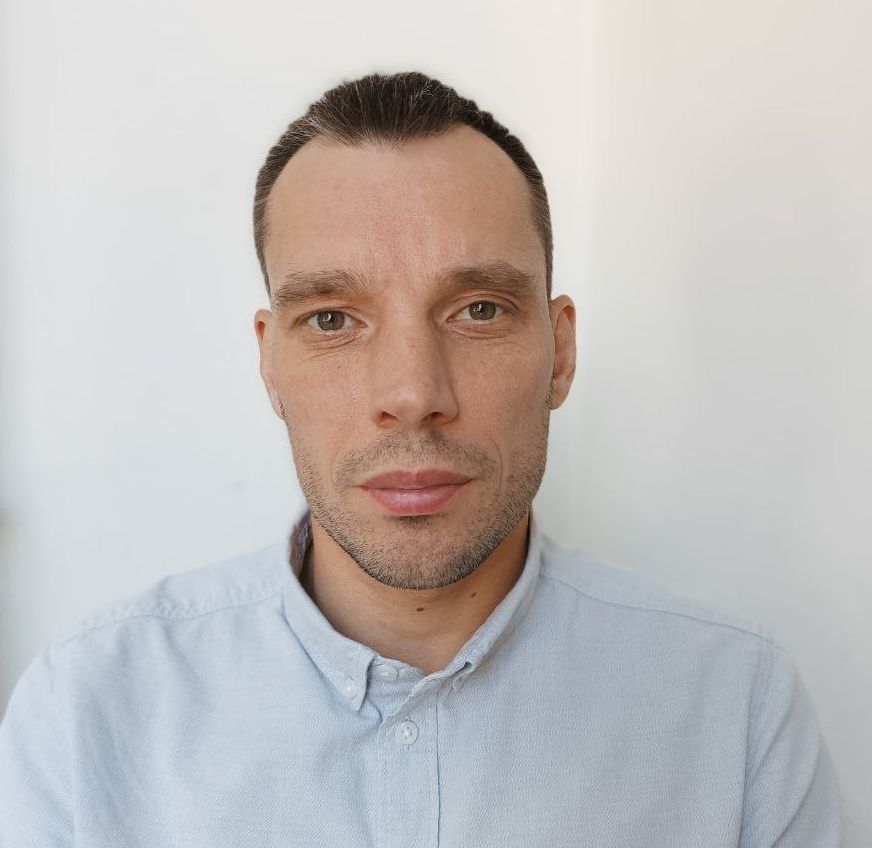
Journalist, host of "What Happened?" podcast from Russian independent media Meduza
Recent Work
Vladislav Gorin
Vladislav Gorin
Carnegie does not take institutional positions on public policy issues; the views represented herein are those of the author(s) and do not necessarily reflect the views of Carnegie, its staff, or its trustees.

When political power is concentrated in the hands of a small circle of people, a country invariably ends up with technological stagnation.
Aleksei Kiselev

Two divergent trends—Putin’s hardline vision of how to prosecute the war in Ukraine, and a growing desire for change in Russia—could tear the regime apart.

Tatiana Stanovaya
Ultimately, Zelensky sided neither with the reform camp nor with the military establishment as such, but with political control.

Balázs Jarábik
Tokayev’s predecessor, Nursultan Nazarbayev, outlined arrangements for a power transition too soon and in too much detail, ultimately losing control over the process. Tokayev is determined not to meet the same fate.

Temur Umarov
Official discussions about mini oil refineries are unlikely to come to anything—but the mere fact they’re happening reveals the regime is failing to deliver a functioning economy.

Sergey Vakulenko